
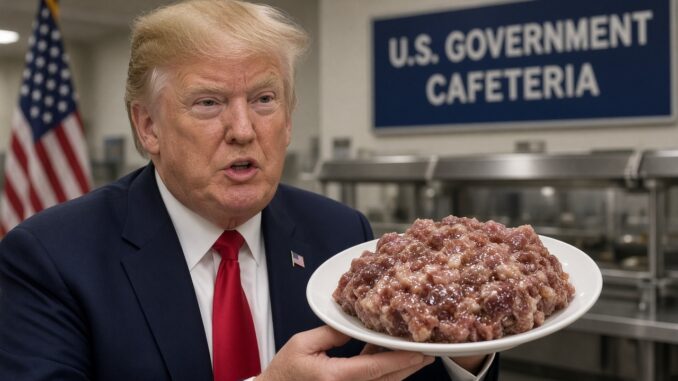
President Donald Trump announced on Truth Social Friday that the government will supply up to 300,000 metric tons of imported ground beef to be sold at prices 25 percent below current market rates. The White House has declined to confirm the source of the meat.
The stated goal is to reduce grocery costs for American families. Yet the absence of key details—specifically who is providing the beef and who committed to the steep discount—has sparked widespread concern. Critics question whether the product can be verified as 100 percent beef.
According to the White House, the imports will enter the United States “with no out of quota tariff,” provided they are used for ground beef and sold at a significant discount. “We have a commitment that this beef will be sold at 25 percent below current market prices,” Trump said, adding that the move would “give space for our Great American Beef Herd to grow again.”
The administration has remained silent on the product’s origin. Press questions about which countries are involved or which importers have agreed to absorb losses on the meat have gone unanswered.
Rancher Pushback
The plan has drawn bipartisan criticism. Industry groups and Republican senators warn it could undermine domestic ranchers just as they work to rebuild the U.S. cattle herd, now at its lowest level in 75 years.
Sen. Tim Sheehy (R-MT) argued the policy disadvantages American producers who have endured years of drought and high feed costs. The U.S. Cattlemen’s Association issued a formal opposition statement, contending that a large influx of foreign meat threatens cattle prices and discourages ranchers from expanding the depleted herd.
Market Concerns and Political Timing
Analysts are also scrutinizing the economic logic. While the USDA projects lower U.S. beef production in 2026, imports alone do not address the underlying cattle shortage. The standard tariff-rate quota imposes a 26.4 percent penalty on over-quota imports—a measure designed to protect the domestic market. Suspending that mechanism effectively removes a key barrier.
Some observers suggest the “mystery meat” arrangement may be intended to blunt political damage ahead of the November elections, as inflation remains a top voter concern. With ground beef prices recently reaching a record $6.89 per pound, the administration appears prepared to prioritize short-term price relief even if it risks alienating ranchers.
As the meatpacking industry prepares for potential pressure on wholesale prices, the central questions persist: Who is supplying the beef, and why rely on an anonymous commitment to keep food costs down?
Be the first to comment